No items yet.
Browse services or products and click Inquire.

Your complete guide to Vata, Pitta and Kapha, the energetic forces that govern every aspect of your health.
Ayurveda's most profound insight is deceptively simple: no two bodies are the same. You have almost certainly noticed it in your own life, why does the same diet that energises your colleague leave you bloated and dull? Why does the same yoga practice that grounds your partner send your mind racing? Why do you thrive in winter while others wilt? The answer, according to this five-thousand-year-old science, lies in the doshas. They are Ayurveda's answer to the question that modern medicine has largely left unanswered, why the same food, herb, season or lifestyle practice heals one person and quietly harms another. Understanding your doshas is not about fitting yourself into a personality archetype. It is about learning the precise language of your own physiology.
Ayurveda teaches that everything in creation, the mountains, the rivers, the weather, and the human body, is composed of five fundamental elements, known as the Panchamahabhutas. These are Earth (Prithvi), Water (Jala), Fire (Agni), Air (Vayu), and Ether (Akasha). Each element carries distinct qualities: Earth is heavy, stable, and dense. Water is fluid, cool, and cohesive. Fire is hot, sharp, and transformative. Air is light, dry, and mobile. Ether is subtle, expansive, and space-giving.
These five elements do not exist separately in nature, they combine. And it is the combinations that produce the three doshas. Each dosha is made of two primary elements working together, and each governs a distinct set of physiological and psychological functions. When the doshas are in their natural proportion, health flourishes. When they are disturbed, by diet, climate, stress, age, or lifestyle, illness begins, subtly at first, then with increasing insistence.
Vata is composed of Air and Ether, the two lightest, most mobile elements. Its qualities reflect this elemental pairing: light, dry, mobile, subtle, rough, and cold. In the body, Vata governs all movement. Every nerve impulse, every breath, every heartbeat, every digestive contraction, every thought that flickers across the mind, these are all Vata in action. It is the animating intelligence of the body, the force that sets everything in motion.
When Vata is in balance, it expresses itself as creativity, enthusiasm, mental agility, and flexible thinking. The Vata-dominant person is often quick-minded, intuitive, imaginative, and drawn to new experiences. Out of balance, those same qualities become their shadows: the creative mind becomes anxious and scattered, the enthusiastic spirit becomes restless and exhausted, the flexibility becomes inconsistency. Common signs of Vata excess include insomnia, constipation, dry skin, irregular digestion, a racing mind, and a pervasive feeling of being ungrounded.
Vata dominates in autumn and early winter, when the air turns cold, dry, and changeable, you will often notice old Vata imbalances resurface in this season. It also predominates in the later stage of life, roughly after age sixty, which is why the elderly are more prone to dryness, lightness, and fragility. Signs that Vata is running high: you cannot sit still, your mind jumps from thought to thought, you feel unanchored, and your digestion has become unpredictable.
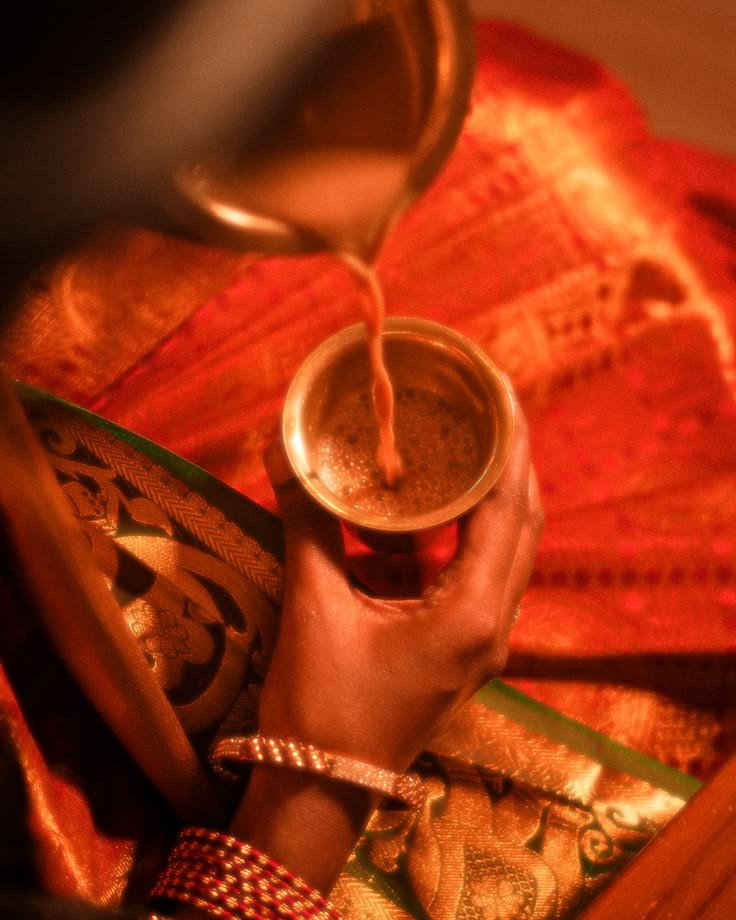
Pitta is composed of Fire and Water, specifically, the transformative heat of fire modulated by the fluid nature of water. Its qualities are hot, sharp, oily, light, and spreading. In the body, Pitta governs all processes of transformation and conversion: digestion, metabolism, body temperature regulation, enzymatic function, and the transformation of raw sensory experience into perception and understanding. It is the intelligence that takes what you ingest, food, information, experience, and converts it into something useful.
A balanced Pitta expresses as sharp intellect, strong and reliable digestion, natural leadership, clarity of purpose, and courageous action. Pitta-dominant individuals often excel in focused, goal-oriented work. They have fire in them, they drive projects forward, make decisive choices, and hold high standards. When that fire tips into excess, however, the same qualities become destructive: sharp intellect becomes critical and cutting, high standards become perfectionism and rage, and leadership becomes domination. Physically, excess Pitta manifests as inflammation, acid reflux, skin rashes, loose stools, a sensation of overheating from within, and a temper that flares with little provocation.
Pitta dominates in summer, when external heat mirrors the internal. It is also the predominant force in midlife, roughly between the ages of thirty and sixty, the years of greatest productivity, ambition, and, if unmanaged, burnout. If you find yourself overheating, short-tempered, and relentlessly driven even when your body is asking you to rest, Pitta is almost certainly in excess.
Kapha is composed of Water and Earth, the two heaviest, most stable elements. Its qualities are heavy, slow, cool, oily, smooth, dense, and stable. In the body, Kapha governs all forms of structure, lubrication, and cohesion. It is the substance of muscles, fat, bone, and connective tissue. It maintains the fluid cushion in the joints. It governs immunity, the capacity for long-term memory, and the felt sense of emotional steadiness and love.
When Kapha is in balance, it is profoundly beautiful: a deeply stable constitution, warm and unconditional love, an immune system that rarely falters, a memory that holds, and a groundedness that weathers difficulty without being swept away. The Kapha-dominant person is often patient, nurturing, reliable, and physically strong. Out of balance, however, Kapha's stability becomes stagnation. Weight accumulates, energy becomes sluggish, mood sinks toward depression, and the mind clings to the familiar even when change is clearly necessary. Congestion, oversleeping, lethargy, difficulty releasing old patterns, and a heaviness in the body and spirit are hallmark signs of Kapha excess.
Kapha dominates in childhood and in spring. Spring, with its damp, heavy, cool quality, is the season when stored Kapha liquefies and rises, which is why colds, congestion, and seasonal heaviness are so common in March and April. If you wake from long sleep still feeling tired, if your weight creeps upward despite a modest diet, and if you find yourself resisting necessary changes, Kapha is asking for attention.
Perhaps the most clinically important distinction in Ayurveda is the difference between Prakriti and Vikriti. Your Prakriti is your original, constitutional nature, the precise ratio of the three doshas that was established at the moment of conception, shaped by your parents' constitutions, the circumstances of your birth, and the conditions of your earliest life. Prakriti is fixed. It does not change over the course of a lifetime. It is your baseline, your blueprint, the set point to which your body perpetually tries to return.
Vikriti, by contrast, is your current doshic state, the condition of the doshas right now, today, as influenced by everything you have eaten, experienced, and endured in recent months and years. Vikriti shifts constantly under the pressures of diet, seasonal changes, stress, sleep quality, relationships, and the accumulated weight of unprocessed experience. All Ayurvedic treatment is aimed at one thing: bringing Vikriti back toward Prakriti.
A practical example illuminates this clearly. A person born with a predominantly Vata constitution, creative, light, and quick by nature, spends three years in a high-pressure career working sixty-hour weeks, skipping meals, and sleeping poorly. Their Vikriti will likely show Pitta excess: inflammation, irritability, acid reflux, and a relentlessness that feels driven rather than chosen. The appropriate treatment targets the Pitta imbalance in Vikriti, cooling foods, a gentler schedule, calming practices, even though their underlying Prakriti is Vata. Treating the wrong layer is both ineffective and potentially harmful. This is why self-diagnosis using a single generalised quiz carries inherent limitations.
Online quizzes can serve as a useful first orientation, offering a general sense of whether you tend toward Vata, Pitta, or Kapha predominance. But a thorough, clinically accurate assessment requires considerably more. In classical Ayurveda, dosha identification is accomplished through Nadi Pariksha, pulse diagnosis, in which a trained practitioner reads the subtle movements of the radial pulse with three fingers to detect the quality, depth, and character of each dosha. This is combined with tongue observation, eye examination, skin and nail assessment, and a detailed health history covering digestion, sleep, menstrual health (where applicable), emotional patterns, and seasonal tendencies.
It is also worth reframing the question itself. "What is your dosha?" is really two questions: "What is your constitutional nature?" and "What is currently imbalanced?" Both answers matter enormously, and they often point in different directions. A reliable assessment by a qualified practitioner answers both questions simultaneously, and with that knowledge, every subsequent recommendation becomes precise rather than approximate.
"In Ayurveda, the goal is never to suppress a dosha, it is to return it to its natural rhythm. When you understand your constitution, you stop fighting your nature and start working with it."
When you know your dosha, both your Prakriti and your current Vikriti, wellness becomes personal in the deepest sense of the word. You no longer need to follow generic dietary advice, seasonal protocols, or exercise prescriptions designed for a statistical average that describes no one in particular. You know which foods genuinely support your tissue health, and which ones, however superficially "healthy," quietly aggravate your system. You understand what kind of movement energises you versus what depletes you. You see why certain seasons consistently challenge you, and you can prepare accordingly. You begin to recognise, in real time, when a dosha is climbing out of balance, and you have the tools to address it before it becomes a physical complaint. Ayurveda ceases to be an abstract ancient system and becomes a living, daily science of self-knowledge.
If you are ready to move beyond the quiz and receive a proper constitutional assessment, Vaidya Falguni offers initial consultations online worldwide and in-person upon request. A single clinical session, grounded in pulse diagnosis and comprehensive health history, provides a map that will serve your health for years. You are also welcome to begin with the free Dosha Quiz for an introductory self-assessment before booking.
A clinical pulse diagnosis with Vaidya Falguni reveals your true constitutional nature and current imbalance with a precision no quiz can match, grounded in 32+ years of authentic Ayurvedic practice. Leave with a personalised protocol, not a generalisation.
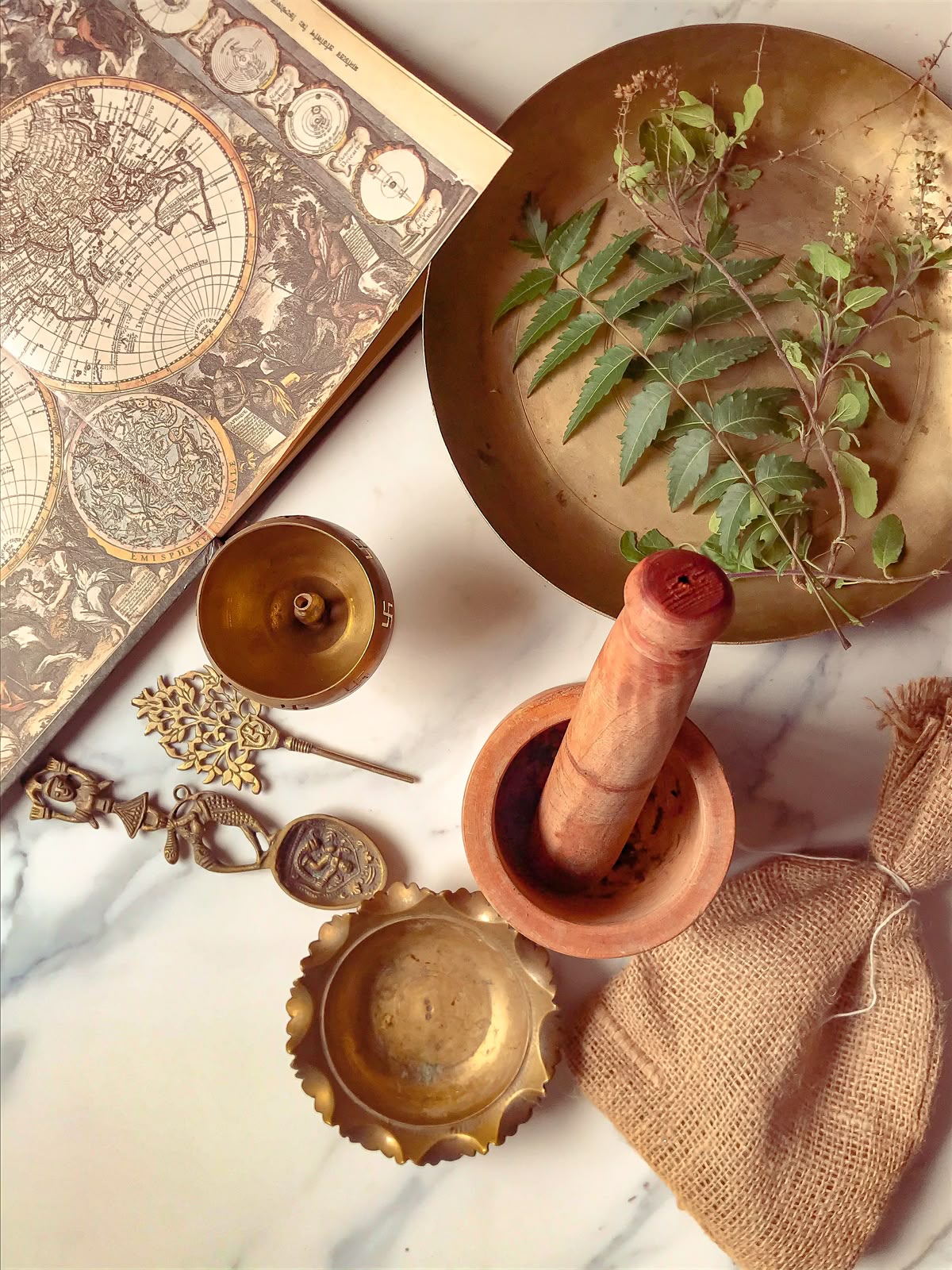
Small, intentional morning rituals, tongue scraping, oil pulling, warm water, that set the tone for balance and vitality all day long.
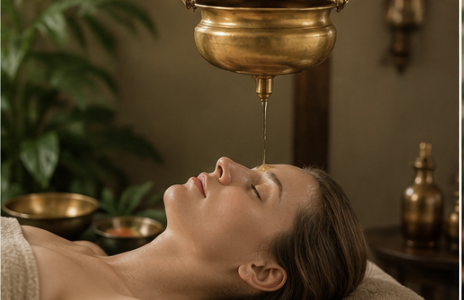
The science and profound calm behind Ayurveda's most celebrated neurological therapy, a warm, continuous stream of oil on the third eye.
Not sure which dosha predominates in your constitution? Answer a short series of questions for your personalised introductory assessment.