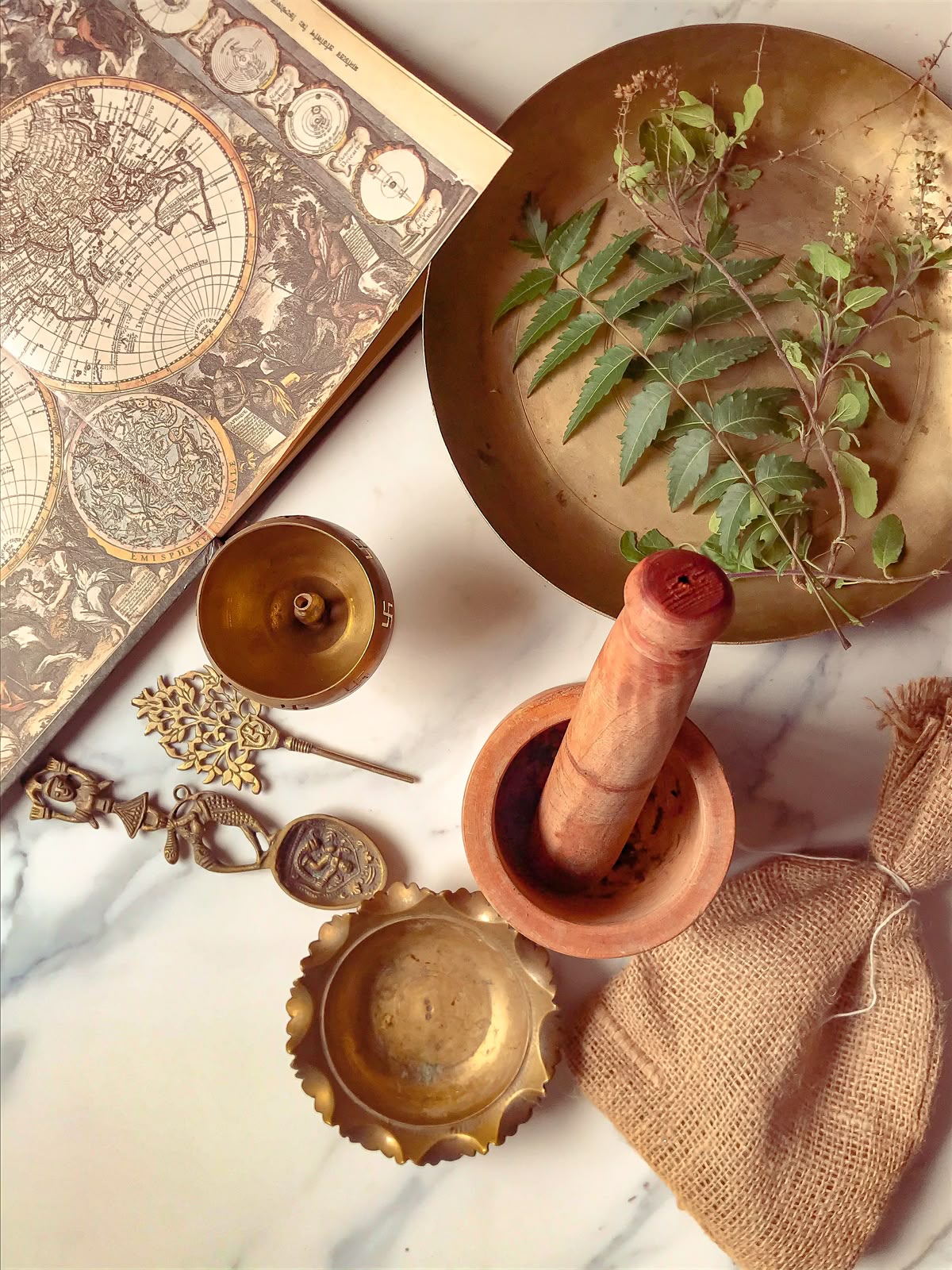
Ayurvedic spices and herbs
Vedic Knowledge

The Resource
Library

Ayurveda, herbal education, seasonal living, and daily practice wisdom from Vaidya Falguni Trivedi.

Featured Ayurveda Basics

Understanding the Three Doshas: A Complete Beginner's Guide

Everything you need to know about Vata, Pitta, and Kapha. What they are, how they govern your body and mind, and why understanding them transforms how you approach your health and healing.

By Vaidya Falguni TrivediMay 202512 min read
Read Full Article →
All Articles

Browse the Library

Ayurvedic morning ritual with singing bowl and candle
Daily Routines

Dinacharya: How an Ayurvedic Morning Routine Transforms Your Day

Small, intentional morning rituals — tongue scraping, oil pulling, warm water, Abhyanga — that set the foundation for balance and vitality all day long. Vaidya Falguni walks you through the classical Dinacharya and how to adapt it for modern life.

April 20256 min read
Read Full Article →
Shirodhara warm oil flowing over the forehead
Therapies

Shirodhara: The Ayurvedic Therapy That Quiets the Mind

A deep look at one of Ayurveda's most beloved therapies. How a continuous stream of warm herbal oil on the forehead activates the parasympathetic nervous system and supports stress relief, insomnia, anxiety, and mental clarity.

March 20258 min read
Read Full Article →
Ayurvedic pulse diagnosis consultation
Ayurveda Basics

Prakriti vs. Vikriti: Why Knowing Your Imbalance Changes Everything

Your Prakriti (natural constitution) is fixed at birth. Your Vikriti (current state) shifts with season, stress, diet, and age. Understanding both is the foundation of effective Ayurvedic self-care and why generalized wellness advice rarely works.

October 20249 min read
Read Full Article →
Ayurvedic herbs on marble surface with brass mortar
Herbal Education

Ashwagandha, Turmeric, and Triphala

Three of Ayurveda's most revered herbs — what they do, and who they are best suited for:

  • Ashwagandha (Withania somnifera) — Adaptogenic root that reduces cortisol, rebuilds Ojas (vital essence), and supports adrenal fatigue. Best for Vata and Kapha.
  • Turmeric (Haridra) — A Tridoshic herb used in Ayurveda for 4,000+ years. Anti-inflammatory, liver-supporting, and deeply purifying. Best taken with black pepper and ghee.
  • Triphala — Three fruits (Amalaki, Bibhitaki, Haritaki) in one formula. Supports digestion, elimination, and eye health. Suitable for all doshas. Take at night before bed.
February 2025Herbal Guide
Read Full Article →
Ayurvedic spices and herbs for kitchari preparation
Nutrition

Kitchari: Ayurveda's One-Pot Reset

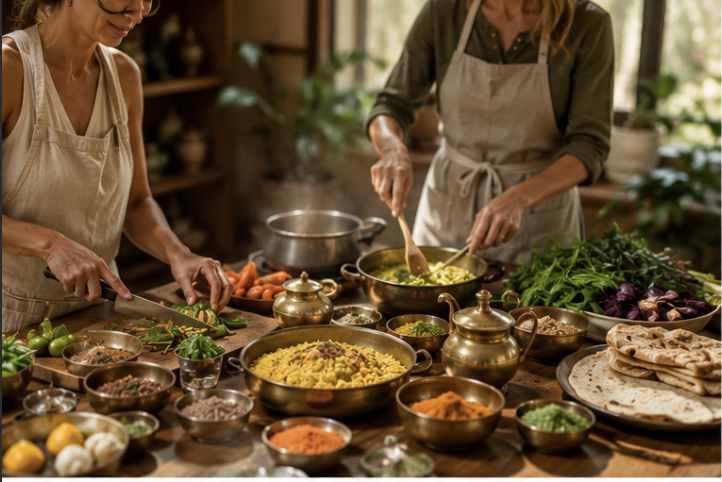
Kitchari (split mung dal with basmati rice, ghee, and digestive spices) is Ayurveda's foundational cleansing food. It is easy to digest, nutritionally complete, and deeply nourishing. Key spices include:

  • Cumin — Kindles Agni (digestive fire), reduces gas and bloating.
  • Coriander — Cooling and anti-inflammatory. Balances Pitta.
  • Turmeric — Purifying and anti-inflammatory. Used in virtually all Ayurvedic cooking.
  • Ghee — Carries herbs into the tissues. Nourishes Ojas and calms Vata.
January 2025Nutrition Guide
Read Full Article →
Abhyanga warm oil massage with brass vessels
Therapies

Abhyanga: Daily Self-Oil Massage

In Ayurveda, daily Abhyanga (warm oil self-massage) is considered one of the most important health practices. Applied before bathing, it nourishes all tissue layers, improves circulation, and grounds the nervous system. Basic guide:

  • Vata — Warm sesame oil. Long, slow, grounding strokes. Focus on joints.
  • Pitta — Cooling coconut or sunflower oil. Moderate pressure, smooth strokes.
  • Kapha — Light mustard or sesame oil. Brisk, vigorous strokes to stimulate circulation.
  • Leave oil on for 10 to 20 minutes, then shower with warm water.
December 2024Therapy Guide
Read Full Article →
Seasonal Ayurvedic wellness ritual with clay pot
Seasonal Wellness

Summer Eating: Cooling Foods to Balance Pitta

Summer is Pitta season. Heat accumulates in the body, and without adjustment, this leads to inflammation, irritability, and skin flare-ups. Ayurvedic principles for summer:

  • Favor sweet, bitter, and astringent tastes. Avoid pungent and sour.
  • Eat cooling foods: cucumber, coconut, coriander, fennel, mint, and lime.
  • Drink room-temperature or slightly cool water. Avoid ice (weakens Agni).
  • Practice Sitali pranayama (cooling breath) in the morning.
November 2024Seasonal Guide
Read Full Article →
Kati Basti lower back oil retention therapy
Therapies

Basti Therapies: Targeted Oil Treatments for Back, Spine, and Eyes

Basti therapies use a dough dam to pool warm medicated oil on a specific area of the body, allowing deep herbal absorption. Key treatments and what they address:

  • Kati Basti — Lower back and lumbar region. Relieves stiffness, disc pain, and spinal dryness.
  • Janu Basti — Both knees. Lubricates joint tissue, reduces stiffness, and eases discomfort.
  • Shiro Basti — Crown of the head. Deeply nourishes brain tissue and nervous system. Powerful for anxiety, depression, and memory.
  • Akshi Tarpan — Both eyes bathed in warm ghee. Soothes screen fatigue, dryness, and visual strain.
September 2024Therapy Guide
Read Full Article →
Warm Ayurvedic winter wellness preparation
Seasonal Wellness

Winter Wellness: Nourishing the Vata Season

Cold, dry, and windy conditions aggravate Vata and deplete Ojas (vital immunity). Ayurvedic practices for a grounded, healthy winter:

  • Favor warm, oily, nourishing foods: soups, stews, ghee, root vegetables.
  • Use warming spices: ginger, cinnamon, cardamom, black pepper, clove.
  • Daily Abhyanga with warm sesame oil, especially on the feet before bed.
  • Maintain consistent sleep and wake times. Vata is deeply stabilized by routine.
August 2024Seasonal Guide
Read Full Article →
Ayurvedic six tastes represented by herbs and spices
Nutrition

The Six Tastes: How Ayurveda Approaches Every Meal

Ayurveda identifies six tastes (Shad Rasa) that should be present at every meal for complete nutrition and dosha balance. Each taste has specific physiological effects:

  • Sweet — Builds tissue, calms Vata and Pitta. (Rice, ghee, milk, root vegetables)
  • Sour — Stimulates digestion, warms the body. (Lemon, yogurt, fermented foods)
  • Pungent — Clears congestion, stimulates metabolism. (Ginger, pepper, mustard)
  • Bitter and Astringent — Detoxifying, reduces Kapha and Pitta. (Turmeric, fenugreek, dark greens)
July 2024Nutrition Guide
Read Full Article →
Evening meditation and Ayurvedic rest ritual
Daily Routines

Ratricharya: The Ayurvedic Evening Routine

What you do in the two hours before bed directly affects the quality of your sleep and your health the following day. Classical Ratricharya (night routine) practices:

  • Stop all screens at least 60 minutes before bed. Light suppresses melatonin production.
  • Massage warm sesame oil onto the soles of the feet (Padabhyanga). Deeply calms Vata.
  • Drink warm milk with nutmeg and cardamom to support sleep and nourish the nervous system.
  • Aim to be in bed by 10pm. The body's natural detox cycle begins at 10pm and requires sleep.
June 2024Routine Guide
Read Full Article →
Ayurvedic practitioner with herbal preparations
Herbal Education

Shatavari, Brahmi, and Neem: Herbs for Women's Wellness

Three of Ayurveda's most time-honored herbs for women's health, hormonal balance, and wellbeing:

  • Shatavari — Known as the "Queen of Herbs." Supports hormonal balance, fertility, lactation, and menopausal transitions. Deeply nourishing for Pitta and Vata women.
  • Brahmi (Bacopa) — A Medhya Rasayana (brain tonic) that supports memory, focus, and the nervous system. Excellent for stress, anxiety, and mental fatigue. Calms Pitta.
  • Neem — A powerful purifying herb used for skin health, blood cleansing, and immune support. Strongly anti-bacterial. Best for Pitta-type skin and infections.
May 2024Herbal Guide
Read Full Article →
Pranayama and yoga practice in a sunlit space
Mindfulness

Pranayama for Your Dosha: Breathing by Constitution

Not all breathing practices suit all constitutions. In Ayurveda, pranayama is prescribed according to your dosha. A brief guide to the right practice for you:

  • Vata — Nadi Shodhana (alternate nostril breathing). Grounds and calms a scattered mind. Practice slowly, 5 to 10 minutes.
  • Pitta — Sitali or Sitkari (cooling breath through a curled tongue or teeth). Reduces heat, anger, and inflammation. Practice in the morning.
  • Kapha — Kapalabhati (skull-shining breath). Stimulating, energizing, clears mucus and sluggishness. 2 to 5 minute rounds in the morning.
April 2024Practice Guide
Read Full Article →
Panchakarma Ayurvedic detox and rejuvenation program
Ayurveda Basics

Panchakarma: What It Is, and What to Expect

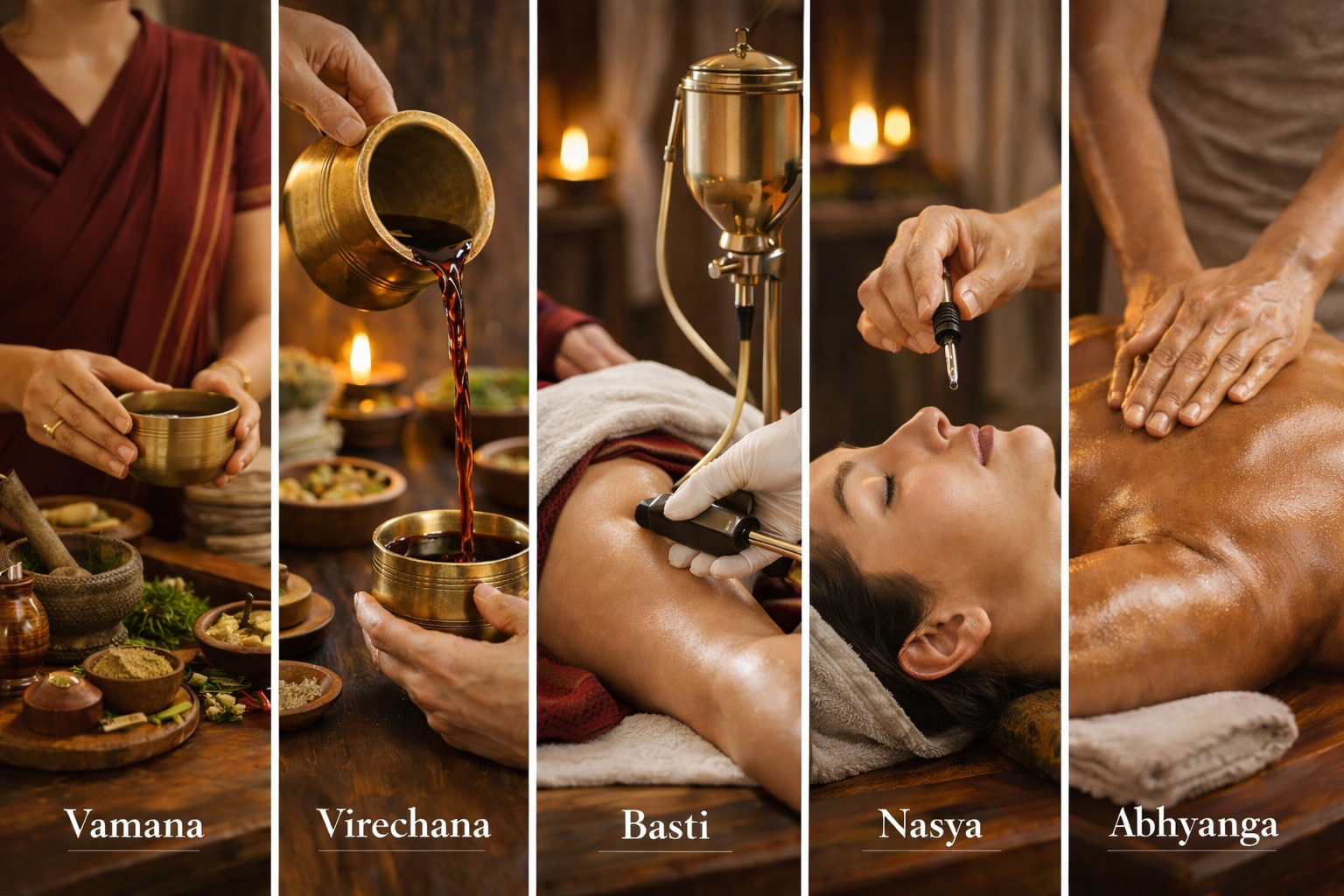
Panchakarma (literally "five actions") is Ayurveda's most comprehensive purification system. It is not a spa retreat — it is a medically precise protocol administered by a trained practitioner. Key phases:

  • Purvakarma (Preparation) — Internal oleation with ghee and full-body Abhyanga and Swedana to loosen toxins from tissues.
  • Pradhanakarma (Main treatment) — The five classical actions: Vamana (emesis), Virechana (purgation), Basti (enema), Nasya, and Raktamokshana. Applied as indicated per constitution.
  • Paschatkarma (Recovery) — Gradual reintroduction of food, daily routine rebuilding, and herbal protocols to stabilize the renewed system.
March 202410 min read
Read Full Article →
Ready to Go Deeper?

Knowledge Is the Start
Guidance Is the Journey

Articles give you a foundation. A personal consultation with Vaidya Falguni gives you a roadmap built entirely around your unique constitution and life.