No items yet.
Browse services or products and click Inquire.
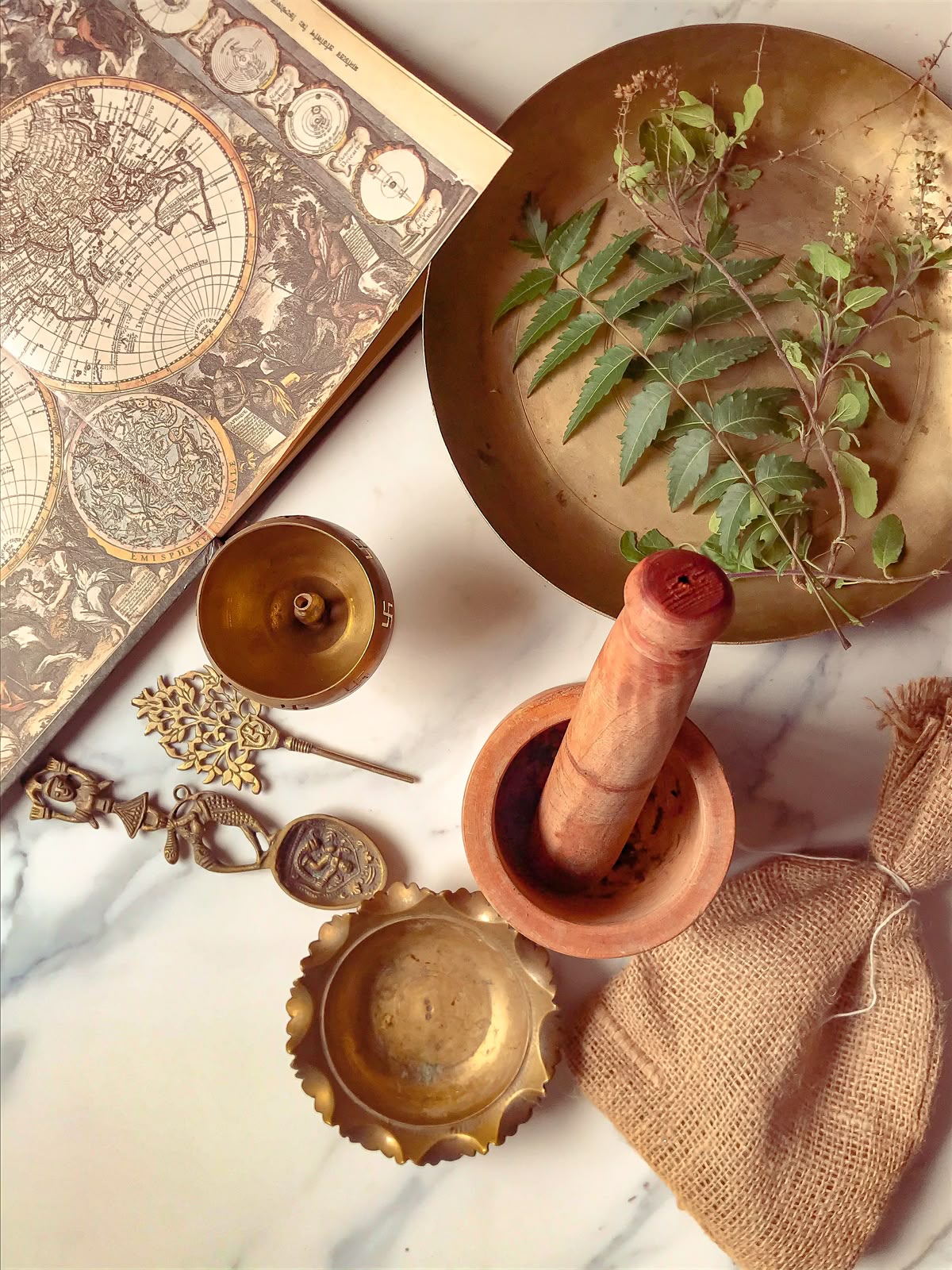
How an Ayurvedic morning routine, practiced consistently, becomes the single most powerful health intervention available to you.
Most people already know what they should be doing to feel better. They know they should sleep earlier, eat more slowly, move their bodies, spend less time on screens. The problem is almost never knowledge, it is structure. Without a coherent framework to hold these intentions, they dissolve by mid-morning. The Ayurvedic concept of Dinacharya, from dina meaning day and charya meaning following, or discipline, offers exactly that: not a checklist of health hacks to feel guilty about skipping, but a considered daily architecture for the body and mind, built around the natural rhythms of the world we move through.
Ayurveda recognises that each portion of the day is governed by a distinct doshic energy, and that aligning our activities with these energies rather than fighting them is the foundation of sustained vitality.
Kapha governs the early morning (6–10am) and the early evening (6–10pm), its qualities are heavy, slow, cool, and building. Pitta governs midday (10am–2pm) and the hours around midnight (10pm–2am), sharp, transformative, metabolic, intense. Vata governs the late afternoon (2–6pm) and the period just before dawn (2–6am), light, creative, spacious, mobile.
The Dinacharya is designed to work with these cycles, not against them. Waking during the Vata window, before 6am, means rising into an atmosphere of natural lightness and mental clarity. The body lifts easily. The mind is quiet but alert. Waking during Kapha time, after 6am, means inheriting the heaviness of that phase. You feel it in the slowness of thought, the reluctance of the body, the desire to stay horizontal. That heaviness is not laziness. It is the body reflecting the doshic qualities of the hour.
This is not metaphor. It is a practical, observable framework for understanding why the same person can feel completely different depending on what time they get out of bed.
Aim to rise between 5 and 6am, what the classical texts call Brahmi muhurta, the hour of Brahma, approximately 96 minutes before sunrise. If that is not currently realistic, 7am is a reasonable starting point. What matters as much as the time is what you do in the first moments of being awake.
Before reaching for a phone: sit up slowly. Take three conscious breaths. Let the mind settle into the day before you allow the day to settle into the mind. Set an intention, even a single quiet word or quality you wish to carry with you. This is not mysticism; it is the practical recognition that the first mental state you inhabit each morning tends to colour everything that follows. A morning begun in reactivity, immediately scanning messages, news, notifications, is a morning that belongs to everyone but you. The Dinacharya begins by reclaiming it.
Before consuming anything, water, coffee, food, use a copper or stainless steel tongue scraper. Hold both ends, place the curved edge at the back of the tongue, and draw it forward with gentle firm pressure. Seven to ten strokes is sufficient. Rinse the scraper between passes.
Ayurveda teaches that during sleep, the digestive system continues its work, and ama, metabolic waste, incompletely processed matter, accumulates on the surface of the tongue. Removing it before swallowing anything prevents its reabsorption into the system. Modern research is broadly supportive: tongue scraping has been shown to reduce volatile sulfur compounds (VSCs), the molecules responsible for halitosis, significantly more effectively than brushing alone, and substantially lowers the bacterial load associated with oral disease, cardiovascular disease, and gut dysbiosis.
Copper is the preferred material in Ayurveda for good reason: it is naturally antimicrobial, and carries specific biochemical properties that align with the tradition’s understanding of oral health. It also shows you, unmistakably, what the night has deposited, which is reason enough to make the practice non-negotiable.
Take one tablespoon of cold-pressed sesame oil (warming, grounding, traditional) or coconut oil (cooling, appropriate in Pitta-dominant constitutions) into the mouth. In the Kawala method, swish it actively around the mouth for ten to twenty minutes, drawing it through the teeth, around the gums, across the palate. In Gandush, the oil is held without movement for several minutes. Both methods have their applications; Kawala is the more accessible daily practice.
When finished, spit into a waste bin, not the sink or toilet, as oil can solidify in pipes over time. Do not swallow. The oil will have changed in colour and consistency, which is evidence of the process at work.
Clinical research confirms what Ayurveda has long maintained: regular oil pulling produces significant reductions in Streptococcus mutans (the primary cavity-causing bacterium) and Lactobacillus counts in saliva, reduces plaque and gingivitis at rates comparable to chlorhexidine mouthwash, and supports jaw joint health. It also, practically speaking, creates a span of ten to twenty silent minutes each morning during which you cannot be on your phone, which is, itself, of considerable value.
Tilt the head back slightly. Place two to four drops of warm sesame oil or a prepared herbal nasya oil into each nostril and sniff gently. Follow with a few slow deep breaths through the nose.
Ayurveda considers the nasal passages the gateway to the brain and the primary seat of Prana Vata, the form of Vata that governs mental function, sensory clarity, and emotional stability. The nose is also the first line of defence against airborne pathogens. Keeping the mucous membranes lubricated with medicated oil creates a protective barrier, reduces dryness and irritation, and maintains the conditions for clear thought and a settled nervous system.
Nasya is particularly valuable in dry climates, artificially heated or cooled indoor environments, and for anyone who experiences chronic congestion, sinus headaches, anxiety, or mental fog. It takes under two minutes and produces benefits that compound quietly over weeks and months of consistent practice.
Even ten to fifteen minutes of self-massage with warm oil before bathing is one of the most deeply restorative practices in the entire Ayurvedic daily routine. Warm sesame oil is the classical choice, penetrating, nourishing, grounding. Coconut oil is appropriate for Pitta types or warm climates. Dosha-specific herbal oils, prescribed by a practitioner, carry the added intelligence of carefully chosen botanicals.
The skin is the body’s largest organ and is densely populated with nerve endings. Warm oil applied with slow, attentive pressure activates the parasympathetic nervous system, shifting the body out of its chronic low-grade stress response and into the conditions necessary for repair and regeneration. It stimulates lymphatic drainage, lubricates joints, counters the dryness and depletion that accumulate through the wear of daily life, and communicates to the nervous system that it is safe. This last point is not trivial. In a world that constantly signals urgency and threat, a daily practice that signals safety has profound implications for long-term health.
Massage with long strokes on the limbs, circular strokes on the joints, and gentle clockwise movement on the abdomen. Always massage toward the heart. Allow the oil to absorb for at least five minutes before bathing. The practice is especially transformative for Vata-dominant individuals, whose constitutions are prone to dryness, irregularity, and nervous system depletion, but every constitution benefits.
Before food, before supplements, before anything: a cup of warm or hot water. Not cold, this is not a matter of preference but of physiology. In Ayurveda, cold water encountered first thing in the morning dampens Agni, digestive fire, at the precise moment you want to be kindling it. Warm water does the opposite: it stimulates Agni, encourages peristalsis, and begins to flush the accumulated ama of the overnight fast from the digestive tract.
Adding a thin slice of fresh lemon provides a gentle stimulus to the liver’s morning detoxification processes and introduces vitamin C in a bioavailable form. A small pinch of rock salt (not table salt) supplies trace minerals and electrolytes that support the cellular rehydration that the night’s sleep requires. This is a complete, elegant morning protocol in a single cup, and it costs nothing.
Do not attempt to implement every practice simultaneously. This is the single most reliable way to guarantee abandonment within a week. The mind recoils from wholesale transformation; it accepts, and even welcomes, incremental change that compounds over time.
Start with one practice. Tongue scraping is the most accessible entry point, it takes two minutes, produces immediate and tangible results, and asks nothing of the nervous system. Practice it every morning for twenty-one days until it becomes reflexive, as unremarkable as washing your face. Then add oil pulling. Then nasya. Then Abhyanga on weekends, and eventually on weekdays as your schedule permits. Build the architecture one room at a time until the whole structure feels effortless and obvious.
The goal is not perfection. It is consistency. A five-minute Dinacharya practiced every day has incomparably more value than a forty-minute Dinacharya practiced twice a week in a burst of motivation. The body responds to the regularity as much as to the practices themselves.
The Dinacharya is ultimately a personal practice. The specific oils, the timing, the duration, the particular sequence of practices that will serve you best, these are best determined in consultation with a practitioner who knows your constitution, your current imbalances, and the particular demands of your life. What is written here is a foundation. The calibration is yours.
| Practice | Duration | Notes |
|---|---|---|
| Wake before 6am | As early as 5am | Sit, breathe, set intention first |
| Tongue scraping | 2 min | Copper scraper, 7–10 strokes |
| Oil pulling | 15–20 min | Sesame or coconut oil; spit into bin |
| Nasya | 2 min | 2–4 drops warm oil per nostril |
| Abhyanga | 10–15 min | Warm oil before bathing |
| Warm water | Before breakfast | With lemon & rock salt; never cold |
Duration and specific oils or herbs are tailored to your constitution during your consultation with Vaidya Falguni Trivedi.

Everything you need to know about Vata, Pitta and Kapha, what they are, how they govern your body and mind, and why understanding them changes everything about your health.
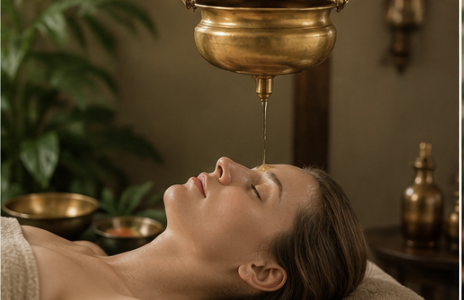
A warm, steady stream of herbal oil poured across the forehead, discover why Shirodhara remains one of Ayurveda’s most profound treatments for the nervous system and the mind.
Understanding your unique mind-body constitution is the first step toward building a Dinacharya, and a life, that genuinely supports who you are. Take the guided quiz.